

A result can be announced in a room. The demand for answers after a death does not end there.
OPINION · THE DAILY PULSE EDITORIAL

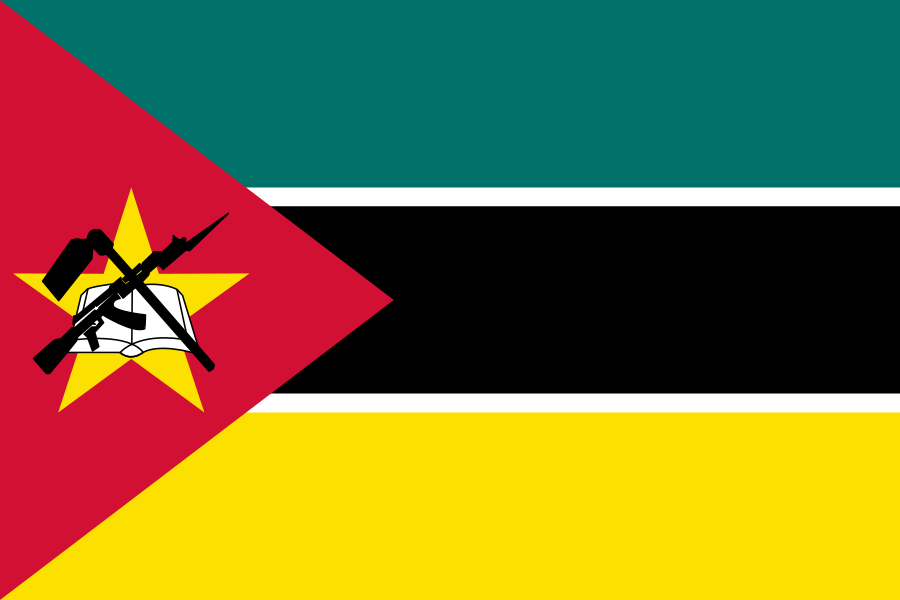
An election result tells a country who has been declared the winner. It cannot tell a family why someone died, what evidence investigators have gathered or whether anyone will answer for the harm. Mozambique’s disputed October 2024 vote and the documented crackdown that followed demand attention to those unanswered questions.
Amnesty International’s April 2025 investigation documented unlawful killings, serious injuries, arbitrary arrests and restrictions on information during the protest crackdown. Its evidence included verified videos and witness interviews. It reported sharply different death counts: civil society recorded more than 300 deaths between 21 October and 16 January, while police reported 96, including 17 officers. Those are attributed counts for a particular period, not a single independently settled total.
Families deserve more than a promise to investigate
There were steps towards accountability. Human Rights Watch reported in July 2025 that the attorney general had opened 31 criminal proceedings involving police officers, and that former police commander Bernardino Rafael appeared for a hearing. That matters. An inquiry can preserve evidence and put powerful people under scrutiny. A hearing, however, does not establish anyone’s criminal guilt, and opening a file does not itself provide a family with justice.
Our view is that the real test is what the process delivers: credible findings, protection for witnesses, fair trials where evidence supports charges, and practical support for injured people and bereaved families. Public updates should distinguish investigated allegations from proven offences. Accountability becomes fragile when citizens cannot tell whether a case is moving or merely being announced.
Public order cannot erase the duty to protect life
Authorities have a duty to protect people and property, including officers facing violence. Destruction and attacks should be investigated. That duty also demands restraint, individual responsibility and scrutiny of state force. Peaceful protesters, bystanders and children must not become interchangeable with people accused of criminal acts.
This is why reconciliation cannot be reduced to a meeting between political leaders. The person who lost a relative, the survivor unable to return to work and the witness frightened to speak also have a claim on the country’s future. A political agreement that leaves them outside the room may restore calm without restoring trust.
Mozambique’s experience should make every regional government uncomfortable with celebrating an election solely because a result was eventually announced. The stronger measure is whether a citizen can dispute that result, seek a remedy and remain alive. A country moves forward more convincingly when it faces what happened, rather than asking victims to move on first.
Sources and context
- Amnesty International, 16 April 2025: investigation of the post-election crackdown
- Human Rights Watch, 9 July 2025: police accountability proceedings
Sources reviewed 6 October 2026. Figures and findings are tied to the dates and scope of the linked reports; they are not presented as a final current death toll. The arguments and proposals are editorial opinion.
Read the Politics collection → or explore our other perspectives.












































Leave a Reply